How to Choose the Right Solar System for Your Home, Shop or Factory
How to Choose the Right Solar System for Your Home, Shop or Factory
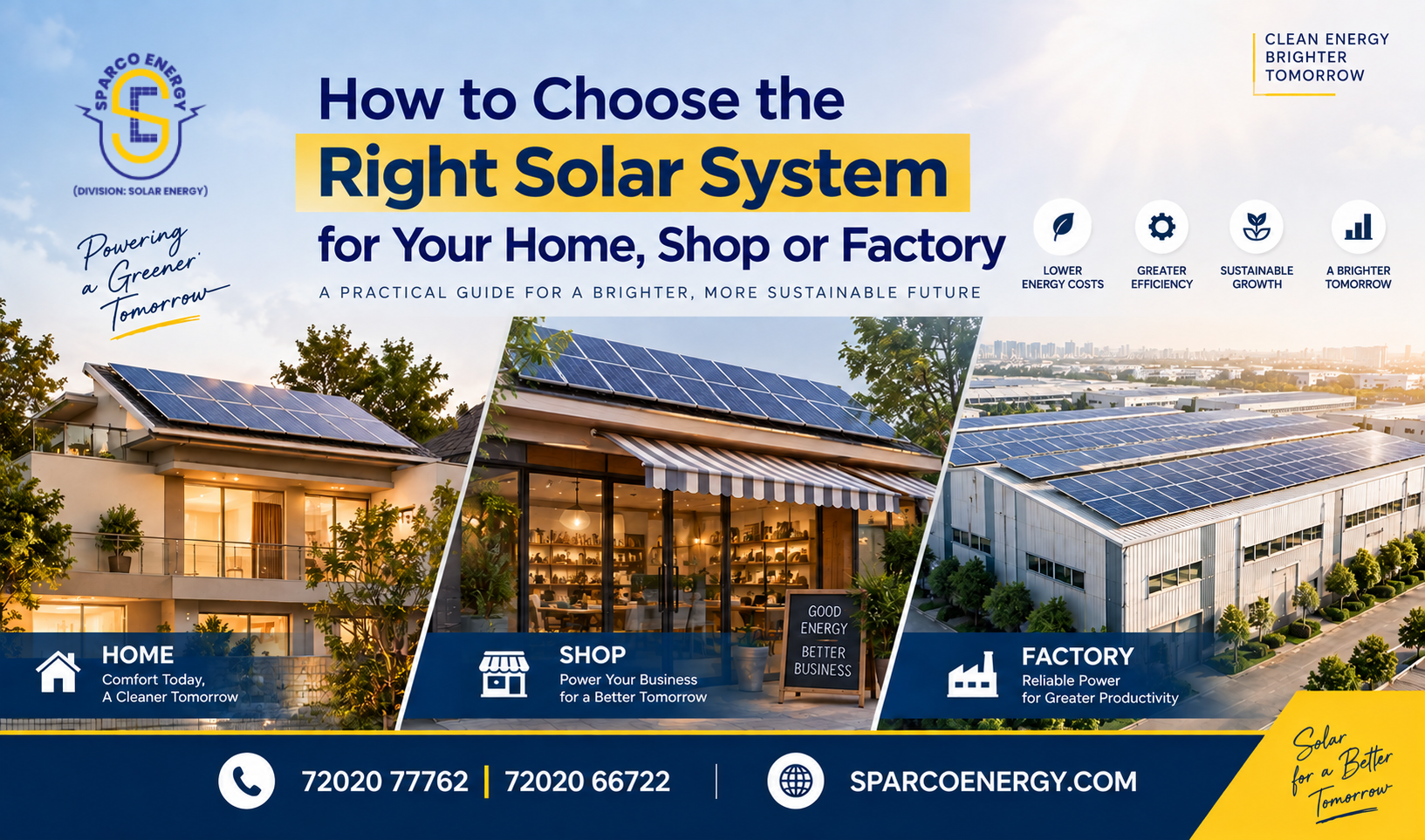
Choosing a solar system is not simply about selecting a number of panels or the highest-capacity system available. The right solution depends on how much electricity you use, when you use it, how much roof or land is available, and what you want the solar system to achieve.
Whether you are a homeowner, shop owner, commercial property manager or factory operator, understanding these factors can help you select a solar solution that fits your actual energy requirements.
This guide explains how to choose the right solar system for different types of properties and what to consider before starting a solar installation.
What Should You Consider Before Choosing a Solar System?
The right solar system size and configuration depend on several practical factors.
Before choosing a system, consider:
- Your monthly electricity consumption
- Recent electricity bills
- Available rooftop or land area
- Property type
- Operating hours
- Existing electrical infrastructure
- Future electricity requirements
- Desired level of energy independence
- Backup or battery storage requirements
- Project budget and long-term objectives
A Simple Rule to Start With
Your electricity consumption should be the starting point for selecting a solar system—not simply the available roof space.
A professional solar assessment can then combine your consumption data with site conditions to determine a suitable system configuration.
Which Solar System May Suit Your Requirement?
Different properties have different energy needs. The following table provides a simple starting point:
| Property / Requirement | Solar Solution to Consider |
|---|---|
| Home with regular electricity usage | Residential Rooftop Solar |
| Shop with daytime electricity consumption | Commercial Rooftop Solar |
| Commercial building with larger energy demand | Commercial Solar System |
| Factory with suitable rooftop space | Industrial Rooftop Solar |
| Factory or business with suitable open land | Ground-Mounted |
| Property requiring backup or storage | Hybrid or Battery-Based Solution |
Important: The final system type and capacity should be determined after reviewing electricity consumption, site conditions and project requirements.
How to Choose a Solar System for Your Home
For homeowners, selecting a residential solar system usually starts with understanding how much electricity the household consumes and how much suitable roof space is available.
1. Check Your Electricity Consumption
Review your recent electricity bills and identify your average monthly usage. This gives you a starting point for estimating the solar capacity you may need.
2. Evaluate Your Roof
Check the usable roof area, orientation, shading and structural condition. Not every part of a roof may be suitable for solar installation.
3. Compare Solar Panel Options
When selecting panels, consider factors such as:
- Efficiency
- Warranty
- Product quality
- Degradation rate
- Available installation space
- Overall system requirements
4. Consider Your Future Requirements
If your household may add air conditioning, electric vehicles, additional appliances or other major loads, future electricity consumption should be considered during system planning.
5. Decide Whether You Need Battery Storage
A standard grid-connected solar system and a battery-based system serve different purposes.
If backup power or energy storage is important, a hybrid or battery-based configuration can be evaluated separately according to your requirements.
Example: Planning a Residential Solar System
Suppose a household in Ahmedabad uses approximately 500 units of electricity per month.
Instead of selecting a system solely based on a fixed package, the homeowner should consider:
- Recent electricity consumption
- Roof area
- Shading conditions
- Existing electrical setup
- Future energy requirements
- Applicable local requirements
A solar professional can then assess the property and recommend a suitable system capacity.
Want to know what type of solar system may suit your property?
Get a Free Solar Assessment
How to Choose a Solar System for a Shop or Commercial Building
Commercial properties often have a different electricity usage pattern from homes. Shops, offices, showrooms and commercial buildings may consume significant electricity during business hours due to lighting, air conditioning, computers and other equipment.
Start With Your Daytime Electricity Usage
Solar generation is available during daylight hours, so understanding how much electricity your business consumes during operating hours is an important part of system planning.
Evaluate Available Roof Space
For commercial properties, rooftop space can be a valuable asset for solar installation. The usable area should be evaluated for:
- Shading
- Roof condition
- Structural suitability
- Equipment placement
- Maintenance access
- Electrical connectivity
Consider Your Business’s Future Growth
If you plan to expand your shop, office, showroom or commercial facility, consider how that expansion could affect future electricity consumption.
Think Beyond the Panel Count
The right commercial solar system is not necessarily the one with the largest number of panels. System capacity should be aligned with electricity consumption, available installation space and project objectives.
How to Choose a Solar System for a Factory or Industrial Facility
Factories and manufacturing units generally have more complex energy requirements than residential or small commercial properties.
An industrial solar project may need to consider electricity demand, connected load, operating schedules, roof structure, electrical infrastructure and future expansion.
Key Factors for Industrial Solar Selection
Electricity Consumption
Analyse recent electricity bills and consumption patterns.
Operating Hours
Understand when the facility uses the most electricity and how this aligns with solar generation.
Roof or Land Availability
Determine whether rooftop or ground-mounted installation is more suitable.
Electrical Infrastructure
The existing electrical system should be evaluated before finalising the solar configuration.
Future Expansion
If production capacity is expected to increase, future electricity demand should be considered during planning.
Operational Continuity
Installation activities should be planned carefully to minimise unnecessary disruption to factory operations.
Industrial Rooftop Solar vs Ground-Mounted Solar
Both options can be suitable for businesses, but the right choice depends on the site.
| Factor | Industrial Rooftop Solar | Ground-Mounted Solar |
|---|---|---|
| Installation Area | Suitable rooftop | Suitable open land |
| Land Requirement | Lower | Higher |
| Structural Assessment | Required | Roof assessment not applicable |
| Space Utilisation | Uses existing roof | Uses available land |
| Suitable For | Factories, warehouses, commercial buildings | Industrial facilities with suitable land |
| Key Considerations | Roof condition, shading, structure | Land, terrain, layout and site conditions |
A site feasibility assessment can help determine which configuration is appropriate for your facility.
What Information Do You Need Before Choosing Solar?
Having the right information ready can make the solar assessment faster and more accurate.
Before contacting a solar company, keep the following details available:
- Recent electricity bills
- Monthly electricity consumption
- Connected load
- Property location
- Property type
- Operating hours
- Available rooftop area
- Available land area, if applicable
- Existing electrical infrastructure
- Future expansion plans
- Backup power requirements
Not Sure What System You Need?
You do not need to determine the final solar capacity yourself.
Share your electricity and property details with a solar EPC company, and the project can be evaluated based on your actual requirements.
Get a Free Solar Feasibility Assessment
What Should You Check Before Choosing a Solar Installation or EPC Company?
Selecting the right solar provider is an important part of the project.
Instead of choosing an installer based only on price, consider the following:
1. Relevant Project Experience
Check whether the company has handled projects similar to yours in terms of property type, capacity and complexity.
2. Site Assessment Capability
A professional provider should evaluate electricity consumption, roof or land availability and site conditions before recommending a system.
3. Engineering & System Design
The design should be based on the property’s actual requirements rather than a standard package.
4. Quality of Major Components
Ask about the solar modules, inverters, mounting structures and other major system components proposed for your project.
5. Installation & Commissioning
Understand who will manage installation, electrical integration, testing and commissioning.
6. Documentation & Approvals Support
Ask what documentation and applicable approval-related support is included within the project scope.
7. Monitoring & Maintenance
Solar is a long-term asset. Understand what monitoring, maintenance and after-sales support will be available after installation.
8. Previous Project Portfolio
Review completed projects and, where possible, look for examples relevant to your property or industry.
Common Mistakes to Avoid When Choosing a Solar System
Selecting solar based only on the lowest upfront price can lead to problems later. Consider these common mistakes before finalising a project.
Choosing Capacity Without Checking Electricity Usage
System capacity should be planned around actual consumption and site feasibility.
Ignoring Future Energy Requirements
A business or household’s electricity consumption can change over time. Future requirements should be considered during planning.
Not Checking Roof Conditions
A roof may have sufficient area but still require structural or technical evaluation before installation.
Focusing Only on Solar Panel Quantity
The overall system includes modules, inverters, mounting structures, electrical components, protection systems and other elements.
Not Comparing EPC Scope
Two solar quotations may appear similar while covering different levels of engineering, installation, documentation, monitoring and after-sales support.
Ignoring Maintenance
A solar installation requires appropriate monitoring and maintenance to support long-term system performance.
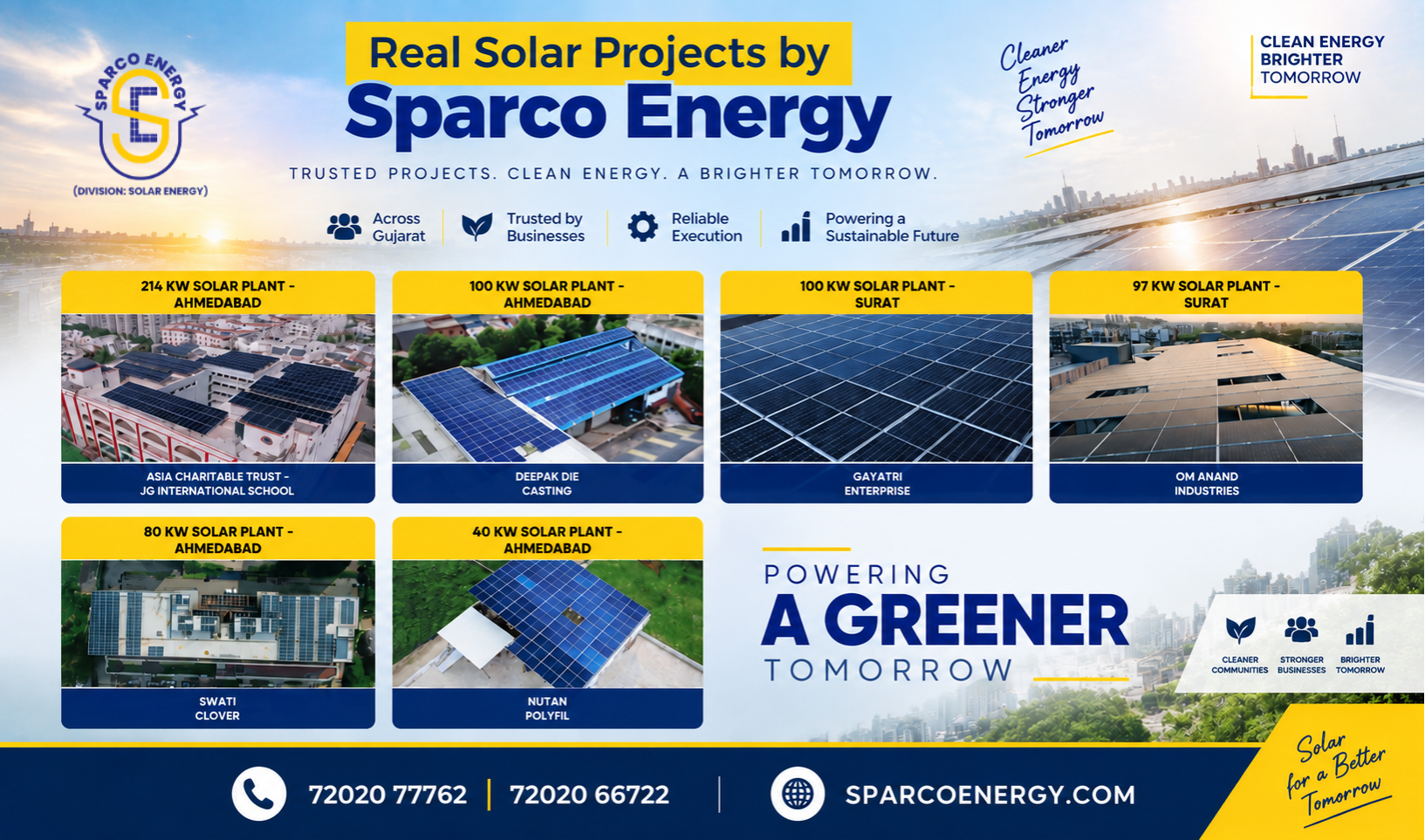
Real Solar Projects by Sparco Energy
Sparco Energy has executed solar projects across Ahmedabad and Gujarat for different types of facilities.
Selected projects include:
214 kW – Asia Charitable Trust / JG International School
Location: Ahmedabad
100 kW – Deepak Die Casting
Location: Ahmedabad
100 kW – Gayatri Enterprise
Location: Surat
97 kW – Om Anand Industries
Location: Surat
80 kW – Swati Clover
Location: Ahmedabad
40 kW – Nutan Polyfil
Location: Ahmedabad
Where verified project data is available, project pages can also showcase information such as system type, annual generation and other performance metrics.
Why Choose Sparco Energy?
Sparco Energy provides solar solutions for residential, commercial and industrial requirements across Gujarat.
Our approach focuses on understanding the property and energy requirements before recommending a suitable solar configuration.
End-to-End Solar EPC Support
From project assessment and engineering to procurement, installation and commissioning, we support the major stages of the solar project.
Residential, Commercial & Industrial Solutions
Different property types require different approaches. Our solutions can be planned for homes, shops, commercial buildings, factories and industrial facilities.
Project-Specific System Design
Solar capacity and configuration are considered based on electricity consumption, available space and site requirements.
Industrial & Commercial Project Experience
Our completed project portfolio includes installations across different sectors and locations in Gujarat.
Local Project Understanding
For projects in Ahmedabad and across Gujarat, local site conditions and applicable project requirements can be considered during planning.
Solar System Selection: A Quick Checklist
Before finalising your solar project, ask these questions:
1. How much electricity do I currently consume?
2. When do I use most of my electricity?
3. How much usable roof or land area do I have?
4. What solar capacity may fit my requirements?
5. Do I need a rooftop or ground-mounted system?
6. Do I require battery backup or energy storage?
7. What equipment and components are included?
8. Who will handle installation and commissioning?
9. What monitoring and maintenance support is provided?
10. Has the EPC company completed similar projects?
Answering these questions before selecting a system can help you make a more informed solar investment decision.
Ready to Find the Right Solar System for Your Property?
Whether you are planning solar for a home, shop, commercial building or factory, the right system starts with understanding your actual energy requirements.
Sparco Energy can help you evaluate your electricity consumption, available installation space and project requirements to identify a suitable solar solution.
Get a Free Solar Assessment
Frequently Asked Questions
1 How do I choose the right solar system?
Start by reviewing your electricity consumption, available roof or land area, operating pattern, future energy requirements and project objectives. A site and energy assessment can then help determine a suitable system type and capacity.
2 What solar system is suitable for a home?
A residential rooftop solar system may be suitable for homes with an appropriate roof area and electricity consumption profile. The final capacity should be based on actual usage and site conditions.
3 Can shops install solar panels?
Yes. Shops and commercial properties with suitable rooftop or other installation space can evaluate a commercial solar system based on their electricity consumption and operating hours.
4 What type of solar system is suitable for a factory?
Factories can consider industrial rooftop solar or ground-mounted solar depending on electricity demand, available space, roof conditions, land availability and electrical infrastructure.
5 How much roof space is required for solar?
The required area depends on the planned system capacity, panel specifications, layout and site conditions. A professional site assessment can determine the usable installation area.
6 Should I choose rooftop or ground-mounted solar?
The choice depends mainly on available space and site conditions. Rooftop solar uses existing roof space, while ground-mounted systems require suitable open land.
7 Do I need a battery with solar panels?
Not necessarily. A grid-connected solar system can operate without batteries. Battery storage or a hybrid system can be considered when backup or energy storage is an important requirement.
8 How do I choose a solar installation company?
Look at relevant project experience, site assessment, engineering capability, component quality, installation scope, documentation support, monitoring, maintenance and previous project work rather than comparing quotations only on price.